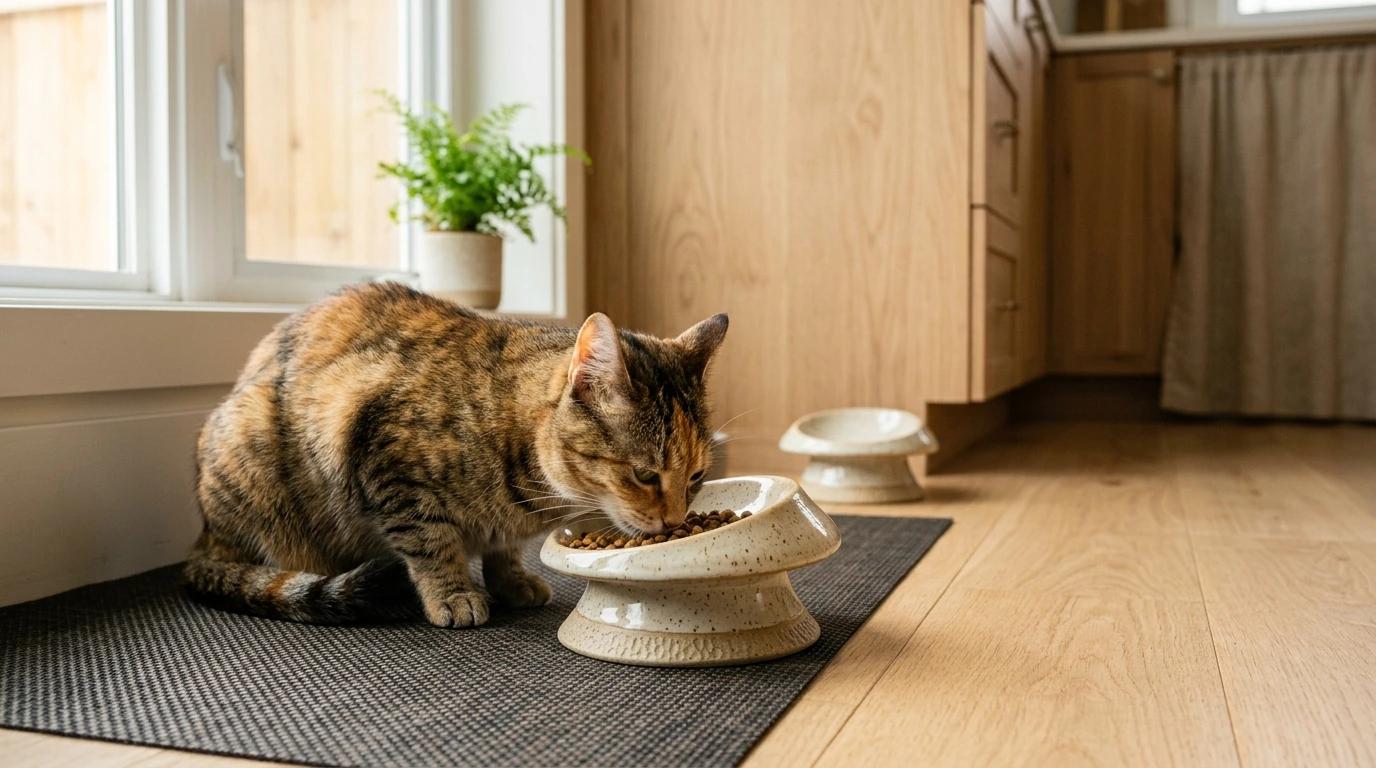
A thoughtfully shaped food or water bowl can make everyday meals cleaner, calmer, and more comfortable—especially for small dogs and cats that struggle with low, flat dishes. This ceramic mushroom-style bowl pairs a gentle slant with a stable, non-slip base to help reduce spills and support a more natural eating posture, while keeping a cute, home-friendly look on the floor.
Many pets eat faster and more comfortably when their bowl design matches how they naturally approach food. A gentle incline can reduce how far a pet has to bend down and forward, which may be helpful for cats and smaller dogs that look cramped over a flat, shallow dish.
If your pet has neck pain, dental issues, or a medical condition affecting posture, it’s still smart to check with your vet about the most supportive feeding setup.
Mess during feeding usually comes from two things: food getting pushed out of reach and bowls drifting across the floor. The slanted interior and grippy base target both problems.
For food safety and hygiene best practices—especially for wet food—follow reputable handling guidance such as the FDA’s pet food safety information.
Ceramic bowls are often chosen for daily feeding because they’re heavier than plastic and feel sturdier on the floor. With that sturdiness comes a few simple care habits that help the bowl stay safe and effective.
For additional general feeding and nutrition guidance, resources like the AAHA and the ASPCA pet care library can be helpful.
This style is a strong match for cats and small-to-medium pets that do best with a slightly angled eating surface and a bowl that doesn’t scoot away mid-meal.
| Pet / situation | Why this design helps | What to check before buying |
|---|---|---|
| Cat that pushes kibble to the edge | Slant gathers food toward the front | Bowl size and rim height |
| Small dog that slides bowls across the floor | Non-slip base improves stability | Floor type and base grip |
| Pet with a sensitive neck or prefers less crouching | Incline can reduce reach and awkward angles | Comfort during a full meal (test with a small portion) |
| Messy drinker | Stable base reduces “chasing the water” | Consider a mat for extra splash protection |
For very large dogs or multi-pet households, capacity matters. If you’re refilling constantly or you need multiple bowls lined up, a wider feeding station or a larger-capacity setup may be more practical.
A gentle incline can make food easier to reach and may reduce how deeply some pets crouch during meals. Comfort varies by your pet’s size, eating style, and any health issues, so it’s best to observe posture and pace over a full meal.
Wipe the underside regularly to remove dust and oils, and place the bowl on a clean, flat surface so the base can grip evenly. If your pet is an enthusiastic eater or drinker, a feeding mat can add extra traction and splash control.
Smooth, glazed ceramic is commonly used for pet bowls and is generally easy to wash and wipe clean. Replace the bowl if it becomes chipped or cracked to avoid sharp edges and to keep feeding surfaces hygienic.









Leave a comment