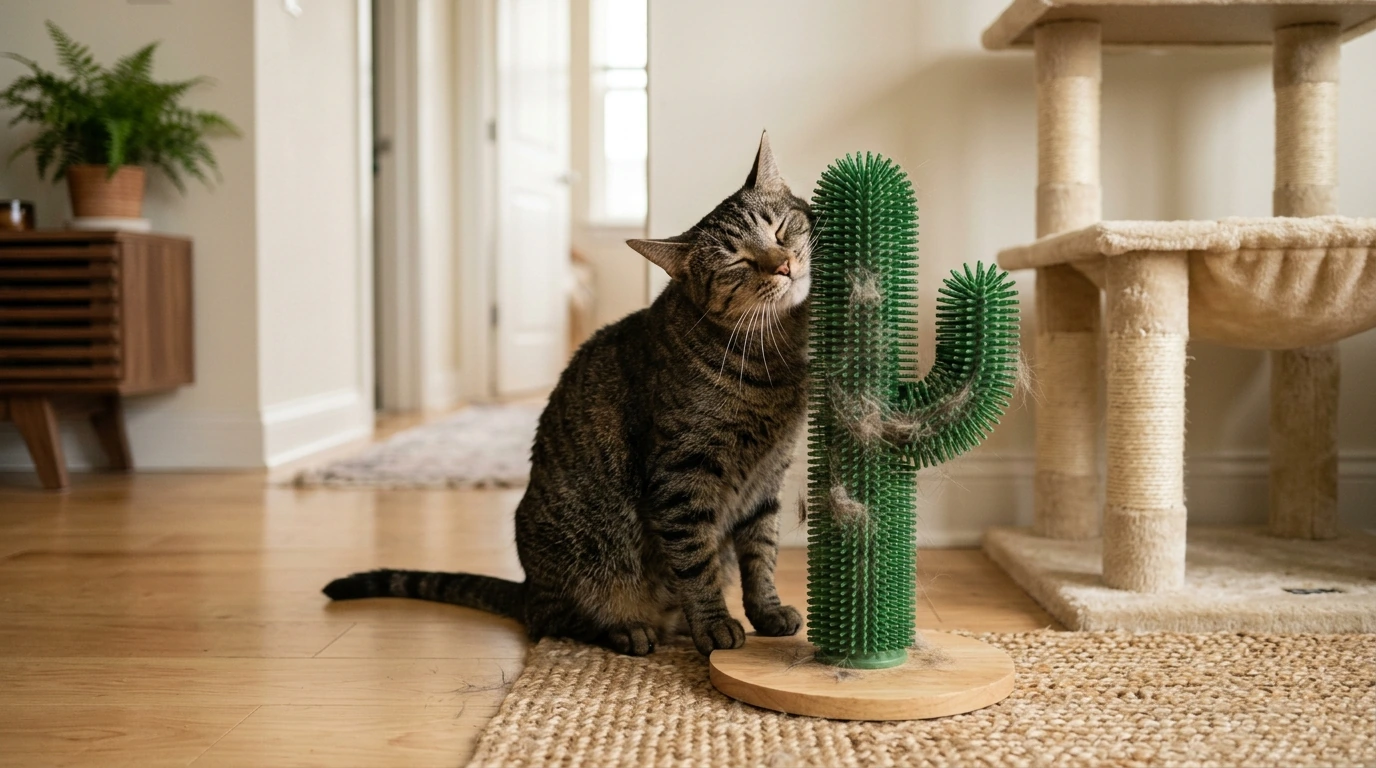
Cats rub, scratch, and “bunt” (press cheeks and forehead) on surfaces for comfort and communication. Those behaviors help them deposit scent, stretch muscles, and relieve itchiness from normal shedding. A self groomer gives them a dedicated spot to do it—so loose fur and dander get lifted in the process, and your cat is less tempted to use chair legs, door frames, or baseboards as their personal grooming post. For more guidance, see Rush immunotherapy in two cats with atopic skin syndrome.
A self groomer works best as a helpful in-between tool, not a total replacement for hands-on grooming. Most cats still benefit from regular brushing or combing (especially long-haired coats), but daily rubs can noticeably cut down on “fur confetti” around favorite corners during seasonal sheds. For general grooming basics and coat care reminders, see guidance from the ASPCA and the Cornell Feline Health Center. For further reading, see PEQULTI Cactus Cat Tree – Arch Self-Groomer, Hammock, ….
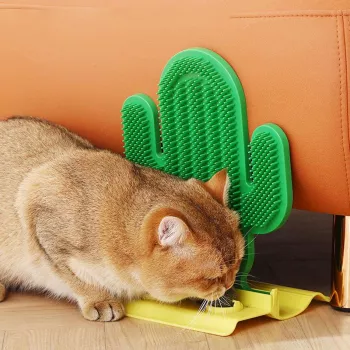
The Cactus Cat Self Groomer is designed to be inviting and easy to place where your cat already likes to pass, pause, and rub. The cactus shape looks playful in a pet corner, while the textured surface encourages the areas cats most often press against objects—cheeks, neck, shoulders, and along the side of the body.
| Cat / Home Situation | Why It Helps | Placement Tip |
|---|---|---|
| Indoor cat with regular shedding | Catches loose hair from daily rubs | Near sleeping spot or favorite doorway |
| Multi-cat home | Adds another grooming station to reduce competition | Use separate stations in different rooms |
| Cat rubs corners and chair legs | Redirects rubbing to a designated surface | Place it directly at the corner being used |
| Cat dislikes handheld brushing | Lets the cat control pressure and duration | Start beside a familiar scratcher or cat tree |
| Long-haired cat | Helps between deeper brush sessions | Pair with weekly combing to prevent mats |
Placement matters more than most people expect. Cats often “collect” their routines—same routes, same corners, same pause points—so your goal is to insert the groomer into an existing habit instead of hoping your cat discovers it randomly.
Some cats start rubbing immediately; others need a low-pressure introduction. A calm rollout prevents avoidance and helps the groomer become part of a normal daily loop.
A self groomer stays effective when it feels “fresh.” If the surface is packed with fur, many cats will ignore it (or rub once and move on). Keeping it clean also helps manage dander buildup around the station.
No. It helps pull off loose fur through daily rubbing, but most cats still need regular brushing or combing—especially long-haired cats, mat-prone coats, or during heavy shedding seasons.
Place it where your cat already rubs or passes frequently, like corners, hallway turns, or near a cat tree. If your cat is hesitant, start in a quiet room and reposition gradually while rewarding any sniffing or rubbing.
Remove trapped fur whenever you notice buildup—often every few days for regular shedders and more frequently during seasonal sheds. Wipe or wash it periodically, and clean more often in multi-cat homes.











Leave a comment