Daily Pet Care Routine: A Simple Plan for Dogs, Cats, and Small Pets
A consistent daily routine supports better health, calmer behavior, and fewer surprises. The goal is simple: cover the essentials every day—food, water, movement, hygiene, enrichment, and a quick health check—then adjust the details for species, age, and lifestyle. For broader pet-care guidance, the AVMA, AAHA, and ASPCA are solid references.
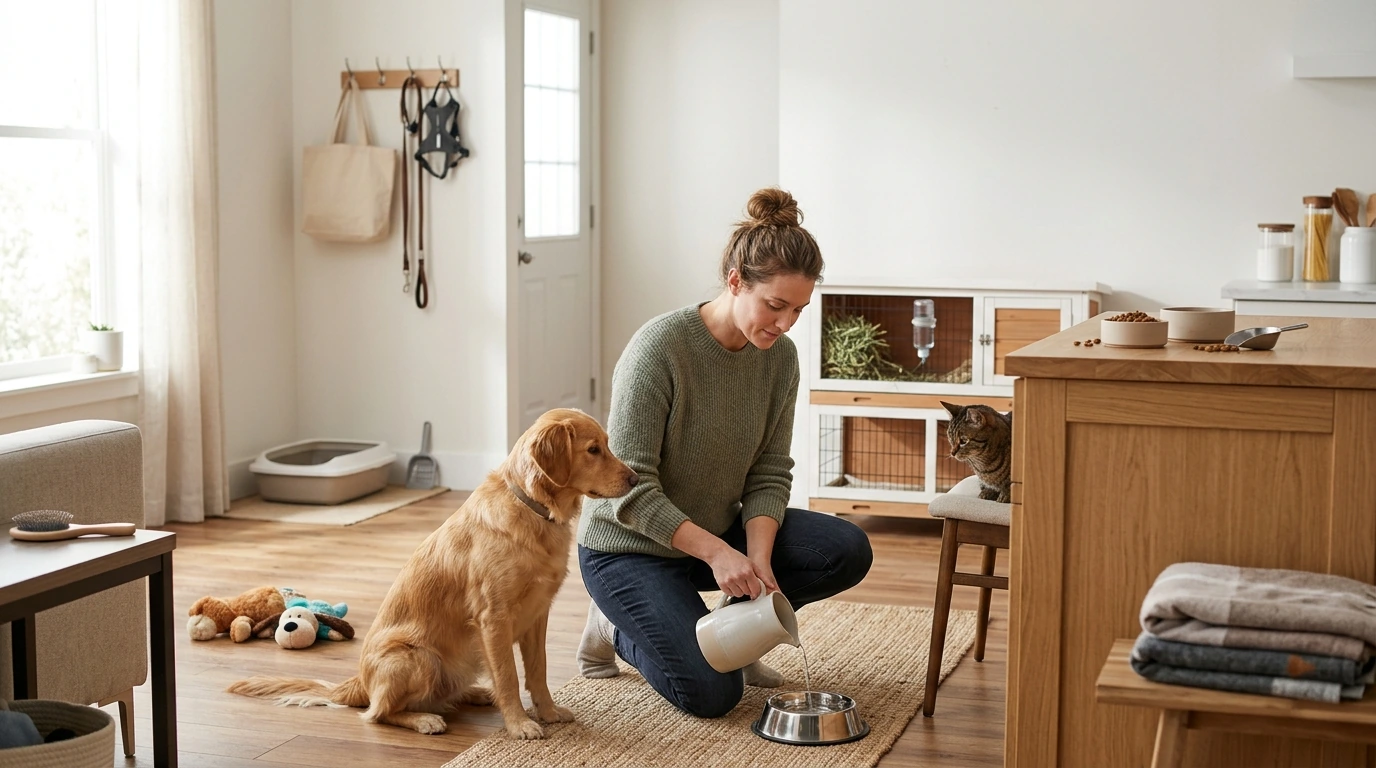
What a Daily Routine Should Cover
- Nutrition: measured meals on a predictable schedule; treats used intentionally.
- Hydration: fresh water available at all times; bowls cleaned regularly.
- Movement: daily activity suited to the pet’s age and fitness (walks, play, exploration).
- Hygiene: quick grooming touches (coat, eyes, ears, paws) and litter/yard cleanup.
- Enrichment: mental stimulation to reduce boredom (training, puzzles, scent games).
- Health check: 60 seconds to spot changes early (appetite, stool, skin, energy).
When these basics happen at roughly the same times each day, many pets settle faster, vocalize less, and show fewer stress behaviors. For people, a repeatable checklist reduces “Did I forget something?” moments—especially in multi-pet homes.
A Quick Daily Schedule Template
- Morning: water refresh, breakfast, potty/litter, short movement session, quick coat/eye check.
- Midday: brief play or training, top up water, check environment (temperature, hazards).
- Evening: dinner, longer walk/play, grooming touchpoints, tidy litter box/yard, calm wind-down.
- Night: final potty/litter, lights/quiet time, confirm doors/windows and pet-safe space.
Daily Routine Checklist (Adjust by Pet Type)
| Time |
All Pets |
Dogs (add-ons) |
Cats (add-ons) |
Small Pets (add-ons) |
| Morning |
Fresh water + rinse bowl; measured meal; 60-second health scan |
Potty break + short walk; leash/harness check |
Scoop litter; 5–10 min play (wand/toy) |
Remove old produce; quick habitat spot-clean |
| Midday |
Enrichment (5–15 min); refresh water; safe-space check |
Training mini-session; chew/toy rotation |
Puzzle feeder or treat hunt; window perch check |
Hay refill; check temperature/drafts |
| Evening |
Meal; calm interaction; tidy living area |
Longer walk/play; paw wipe if needed |
Second play session; brush if shedding |
Full spot-clean; enrich with tunnels/forage |
| Night |
Final check: water, comfort, lights/noise |
Final potty break; set up sleep area |
Final litter scoop if needed; quiet time |
Confirm secure latches; night-safe bedding |
Dogs: Daily Care Focus Points
- Meals: keep feeding times consistent; avoid sudden diet switches; use treats for training rather than extra calories.
- Potty plan: predictable breaks after waking, meals, play, and before bed; reward the exact behavior you want.
- Exercise: tailor intensity to breed, age, and health; include “sniff time” to satisfy mental needs, not just physical ones.
- Coat and paws: a quick brush for longer coats; wipe paws after wet/salty walks; check for ticks, burrs, and pad cracks.
- Home habits: short training reps (sit/down/leave it) help reinforce calm routines and reduce impulsive behavior.
A practical time-saver is keeping walking gear in one place so leaving the house is frictionless. If you’re building consistency with a younger dog, an Adjustable Dog Collar and Puppy Harness Set can simplify daily walk prep and fit adjustments as puppies grow.
Cats: Daily Care Focus Points
- Litter box: scoop at least once daily; place boxes in quiet, accessible locations.
- Play: 10–15 minutes of interactive play reduces boredom-related behaviors; end with a calm wind-down.
- Feeding: measured meals or timed feeders; monitor appetite closely—small changes can be meaningful.
- Grooming: quick brushing for long-haired cats; check eyes/nose for discharge; trim nails as needed.
- Environment: provide vertical space, scratch options, and predictable resting spots.
For daily comfort, stable feeding stations help some cats eat and drink more comfortably. An Elevated Ceramic Cat Bowl is an easy swap if you want a sturdy bowl that’s simple to rinse and reset each morning.
Small Pets (Rabbits, Guinea Pigs, Hamsters): Daily Care Focus Points
- Fresh hay and water: hay for rabbits/guinea pigs is a daily staple; clean water bottles/bowls frequently.
- Habitat hygiene: remove soiled bedding and old food daily; do full cleans on a predictable schedule.
- Safe enrichment: chew-safe items, tunnels, and foraging opportunities; avoid toxic woods or unsafe plastics.
- Gentle health scan: watch for reduced eating, abnormal droppings, changes in posture, or reduced activity.
- Temperature and stress: keep housing away from drafts/heat; provide quiet, secure hiding areas.
The 60-Second Health Check (Daily)
Making the Routine Stick (Without Overhauling Life)
Enrichment doesn’t have to be complicated. For cats, a simple “set up, play, fold away” option can make it easier to follow through daily. An Interactive Folding Cat Tunnel can add variety to short play sessions without taking over your living room.
A Guided Routine Builder for Daily Consistency
- For a step-by-step structure that turns these tasks into a repeatable plan—plus checklists that can be reused—see the Daily Pet Care Routine eBook.
- Useful for multi-pet homes: align feeding, cleaning, and enrichment blocks so nothing gets missed.
- Adaptable templates: adjust for puppies/kittens, seniors, indoor-only cats, and small pet habitats.
FAQ
How long should a daily pet care routine take?
Most routines take about 20–60 minutes total per day, depending on species and activity needs—dogs often take longer due to walks. On busy days, aim for the minimum viable routine: fresh water, meals, bathroom needs, a short enrichment moment, and a quick health check, then batch grooming/cleaning tasks when time opens up.
What are the most important tasks to do every single day?
Non-negotiables are fresh water, appropriate feeding, bathroom or litter/habitat hygiene, some movement or enrichment, and a brief health scan. These cover comfort, safety, and early detection of common problems.
How can a routine be adjusted for a puppy, kitten, or senior pet?
Younger pets typically need more frequent meals, bathroom breaks, and shorter training/play sessions spread through the day. Seniors often do best with gentler activity, warmer comfort, and closer monitoring of appetite, mobility, and bathroom habits—if anything changes quickly or persists, check with a veterinarian.
Recommended for you












Leave a comment