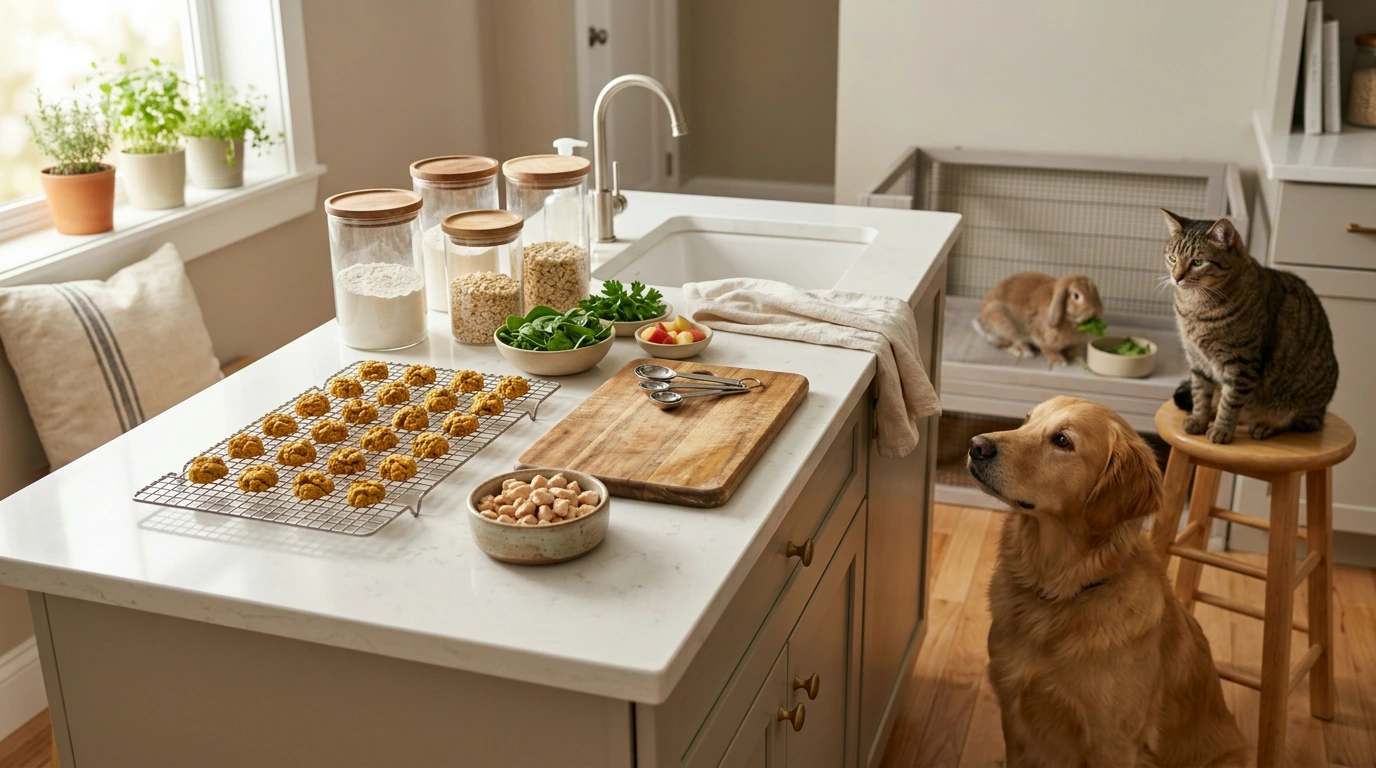
Homemade pet treats can be a simple way to add variety, manage ingredients, and make snack time more engaging—when safety comes first. With a few smart rules, you can prep small batches that work for dogs, cats, and many small pets without turning your kitchen into a full-time bakery. Below you’ll find practical ingredient guidance, kitchen safeguards, and easy treat ideas designed for portion control and peace of mind.
Most pets do best with treat ingredients that are familiar, minimally processed, and easy to portion. For dogs, gentle bases often include cooked lean meats, fully cooked eggs, plain pumpkin, plain yogurt (if tolerated), oats, and rice flour. Cats typically prefer animal-based bites—cooked poultry or fish (boneless) and egg-based nibbles—while keeping carbohydrates low. Small pets (like rabbits and guinea pigs) usually do best with high-fiber greens and only tiny amounts of fruit; many “treat” ingredients that seem wholesome can be too sugary or starchy for frequent use.
| Ingredient | Dogs | Cats | Small Pets (varies by species) | Notes |
|---|---|---|---|---|
| Xylitol (birch sugar) | Avoid | Avoid | Avoid | Can cause severe poisoning; check peanut butter and “sugar-free” items. More details from the FDA. |
| Chocolate/cocoa | Avoid | Avoid | Avoid | Theobromine toxicity risk. |
| Grapes/raisins | Avoid | Avoid | Avoid | Can cause kidney injury in dogs; safest to avoid for all. |
| Onion/garlic/chives | Avoid | Avoid | Avoid | Can damage red blood cells; also avoid powders. Learn more at the Merck Veterinary Manual. |
| Cooked, plain chicken/turkey (boneless) | OK | OK | Not typical | Serve in tiny pieces; avoid skin and seasoning. |
| Plain pumpkin (no spices) | OK | Sometimes | Sometimes | Helpful for some digestion issues; keep portions small. |
| Leafy greens (romaine, cilantro) | Sometimes | Rarely | Often OK | Great for many herbivores; introduce slowly. |
For daily portions, start modest: about 1–3 small treats for small dogs, 3–6 for medium, and 6–10 for large across the day, adjusting based on treat size, activity, and weight trends. If you’re building a treat routine, pairing it with a comfortable walking setup can help balance calories—see the Adjustable Dog Collar and Puppy Harness Set for an easy, everyday option.
For picky cats, serving small treats in a comfortable eating position can help make snack time feel calmer. The Elevated Ceramic Cat Bowl is a simple way to support a tidy, consistent treat-and-meal routine.
If you want a consolidated set of ideas, ingredient cautions, and pet-by-pet snack inspiration, keep a dedicated recipe guide within reach. Tail-Wagging Treats: A Safe & Fun Guide to Homemade Pet Snacks is designed around short ingredient lists, clear storage tips, and practical formats like quick training treats, freezer treats, and gentle baked snacks that are easy to batch and portion.
Treats should stay a small part of daily intake. Start with a few tiny pieces, watch weight and stool quality, and reduce meal portions slightly if treats become frequent; a vet can help set calorie targets for weight management.
Skip xylitol, chocolate/cocoa, grapes/raisins, onions/garlic/chives, macadamia nuts, alcohol, and overly salty or heavily seasoned foods. Also check labels for hidden forms like powders and sweeteners in “sugar-free” products.
Most homemade treats are safest refrigerated or frozen, especially moist recipes with meat, egg, or dairy. Label dates and ingredients, keep raw-meat prep separate from ready-to-eat foods, and discard anything that smells off or shows mold.












Leave a comment