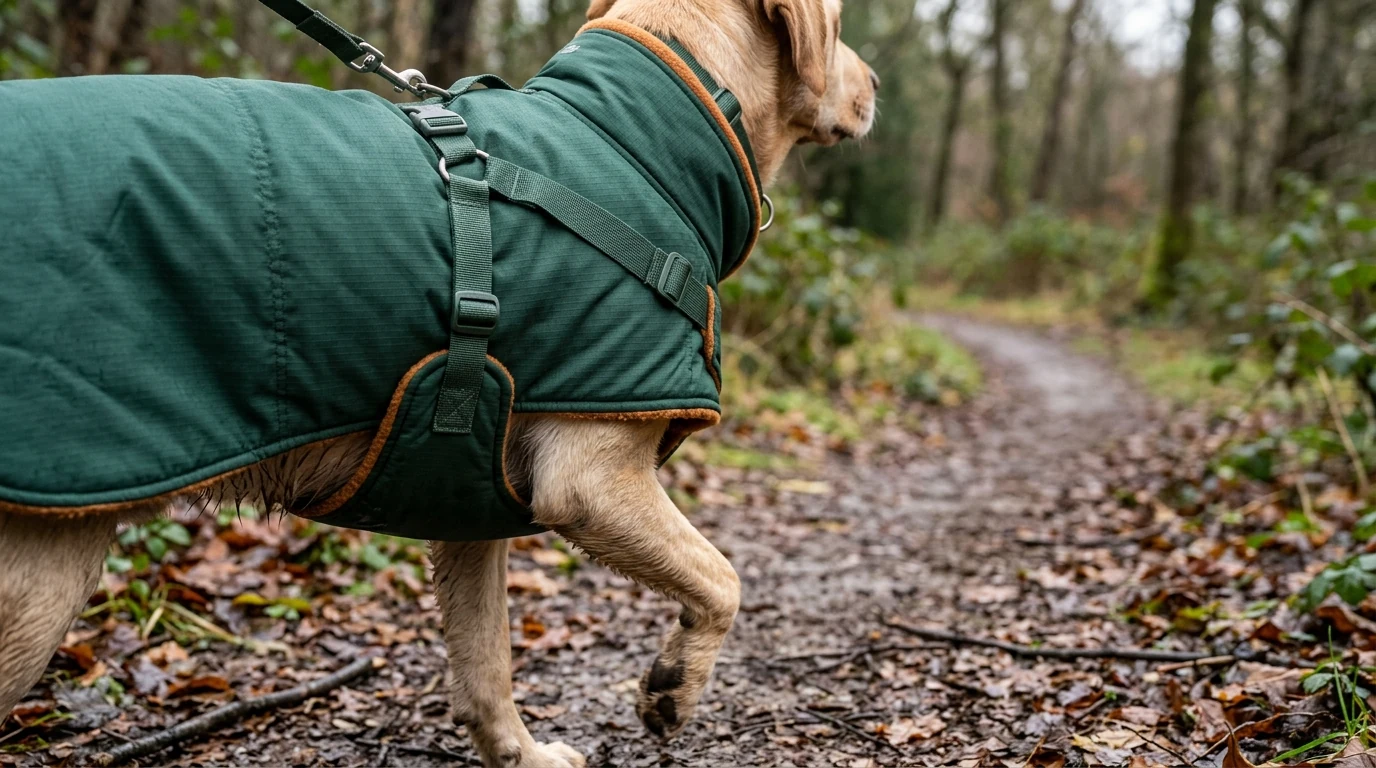
A good warm and waterproof dog coat keeps moisture out, holds heat in, and stays put when your dog runs, shakes, or rolls. Look for a coat with a truly waterproof outer shell (not just “water-resistant”), a warm inner layer, and coverage that protects the core—especially the chest and belly, where wet snow and slush tend to soak through first.
Waterproof shell + sealed construction: Prioritize coated or laminated fabrics and details that reduce leakage, such as covered zippers, storm flaps, or taped seams. These features make a noticeable difference in steady rain or wet snow.
Insulation that stays warm when damp: Synthetic insulation is a solid choice for winter walks because it retains warmth better than many natural fills if it gets a little wet.
Adjustable fit and secure closure: A good coat should cinch at the neck and torso without restricting movement. Wide belly panels, sturdy hook-and-loop closures, and leg loops (when included) help prevent twisting in wind.
Harness compatibility and visibility: If your dog wears a harness, choose a coat with a leash portal or built-in harness access. Reflective trim helps in early-morning or dusk walks.
Senior dogs, short-haired breeds, and dogs with low body fat typically benefit from more insulation. For longer outings in cold, wet conditions, opt for fuller coverage and better weather sealing rather than a thin rain layer.
For a deeper breakdown of materials, features, and what to prioritize for different conditions, see the full guide here: https://doggydreams.shop/what-is-a-good-warm-and-waterproof-dog-coat/.
For Warm & Waterproof Dog Coat: Key Features to Choose, the best answer depends on fit, material, care instructions, and how the product will be used day to day.
Use a waterproof coat with insulation so your dog’s core stays dry and warm, and keep walks shorter in cold downpours. Dry your dog promptly afterward, especially the belly, chest, and paws.










Leave a comment