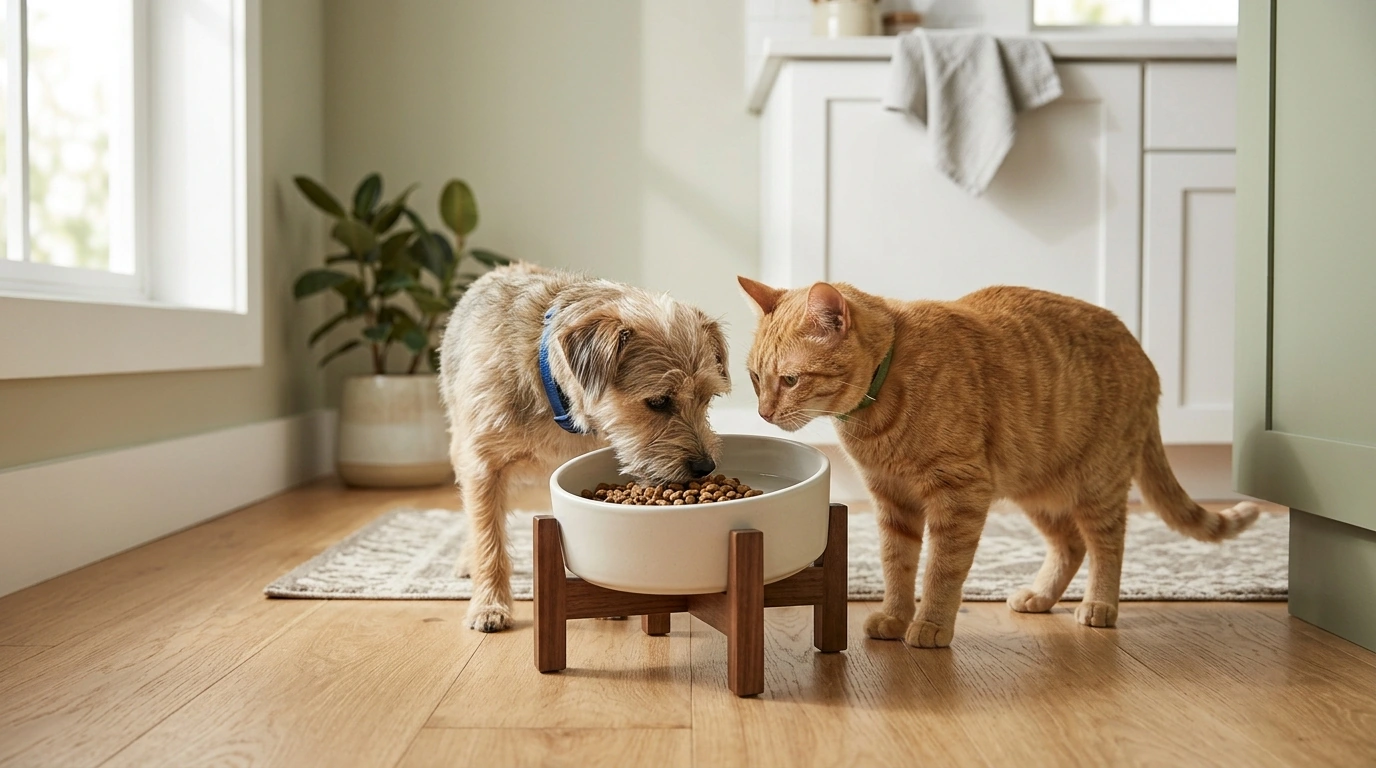
Mealtime works best when it’s comfortable, clean, and predictable. An elevated ceramic pet bowl with a wide mouth is designed to support a more natural eating posture, reduce face and neck strain, and keep food and water better contained. For many cats and dogs—especially pets that hesitate at the bowl, spill often, or seem stiff when bending down—small changes in bowl height and shape can make daily feeding feel smoother. For more guidance, see Pet feeding habits and the microbiological contamination of ….
Beyond comfort, ceramic is a practical material for everyday routines: it’s typically heavier for stability and less likely to hold onto odors compared with some plastics. Pair that with a wide opening and a “neck protection” contour that guides the eating angle, and the bowl becomes a simple upgrade that can improve both tidiness and ease. For further reading, see Plastic, Stainless Steel, Stoneware, Silicone or Ceramic ….
Standard low bowls can encourage pets to dip their head sharply, which may feel awkward for some animals. Elevation shifts the bowl closer to the pet, helping many eat with a more neutral head-and-neck position.
Food safety and clean handling matter, too. The FDA’s guidance on safe pet food practices is a helpful reminder that bowls and feeding areas should be kept clean and dry between meals (FDA: Tips for Keeping Pet Food Safe).
Not all elevated bowls are built the same. A good design balances comfort, stability, and easy cleaning—without forcing an awkward angle or creating hard-to-reach corners where residue can build up.
| Feature | Why it helps | Who benefits most |
|---|---|---|
| Elevated height | Reduces bending at the neck and shoulders | Senior pets, pets with stiffness, small breeds |
| Wide mouth | More space for whiskers/muzzle; easier access to food | Whisker-sensitive cats, flat-faced pets |
| Heavier ceramic | Stability and odor resistance | Eager eaters, multi-pet homes |
| Smooth glazed surface | Simpler cleaning; fewer places for residue to cling | All pets; especially wet-food diets |
| Non-slip base | Prevents sliding and spills | Fast eaters, pets on slick floors |
The goal is comfort, not a specific number. A good setup lets your pet eat without sharply lowering the head or lifting it excessively. Watch your pet’s stance: relaxed shoulders, steady paws, and less shifting usually indicate a better fit.
For nutrition basics and feeding guidance, the AVMA’s pet owner resources are a reliable reference point (AVMA: Pet Nutrition Resources).
If you’re looking for a practical, comfort-focused upgrade, the Elevated Ceramic Pet Bowl with Wide Mouth & Neck Protection for Cats & Dogs is built around the details that often matter most: a stable ceramic build, an open eating area, and a shape meant to support a more comfortable posture during daily meals.
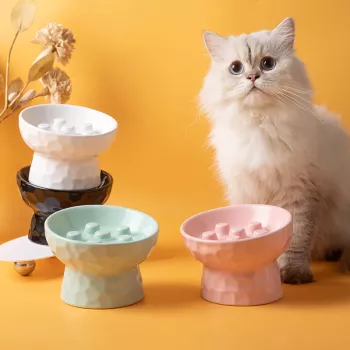
For cat-only households or a second feeding spot, the Elevated Ceramic Cat Bowl is another ceramic option that pairs well with wet-food routines and easy cleanup.
And for pets that get restless between meals, adding enrichment near (but not directly next to) the feeding station can help reduce stress-based grazing. The Interactive Folding Cat Tunnel is a simple way to encourage play and movement away from the bowl area.
They can. Elevation often supports a more neutral head-and-neck position, which may feel easier for seniors or pets that seem stiff when bending down. Comfort varies by size and health, so watch posture and check with a vet if you notice pain, coughing, or swallowing trouble.
Often, yes. Some cats are sensitive to repeated whisker contact with narrow bowl sides, which can lead to leaving food at the rim or pawing at the bowl. A wider, more open shape reduces face contact and can make the entire meal easier to access.
Wash food bowls daily, especially for wet food, and refresh water every day. A quick rinse after each meal helps prevent residue from drying on the glaze, and any bowl with chips or cracks should be replaced for safety and hygiene.









Leave a comment